Empowering low-income small scale farmers through an educational platform.
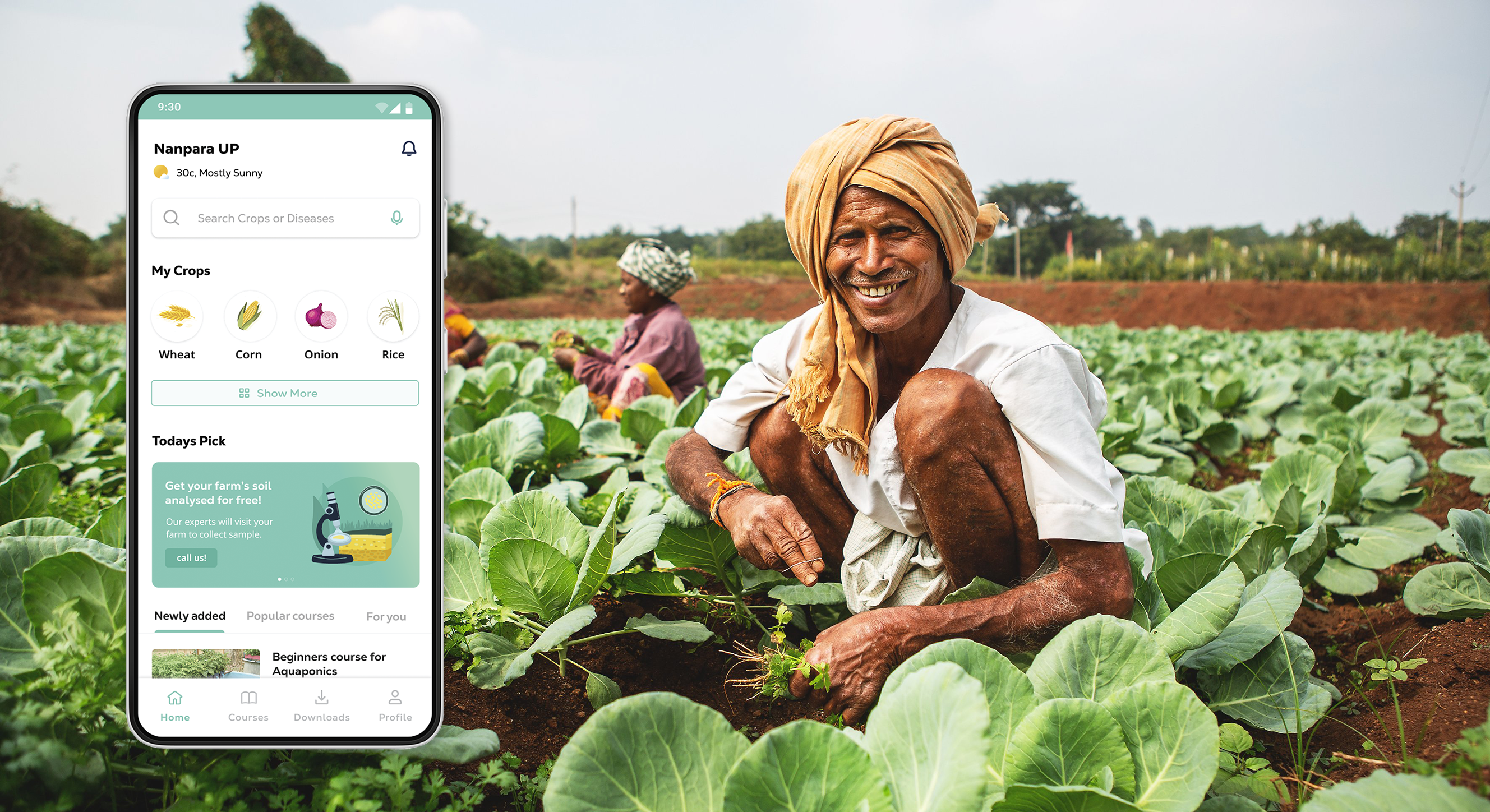
Sambandh is an online course app developed by Oorja Development solutions, featuring courses related to agriculture. These courses are free to take, and consist of watching lecture videos and presentations. They are specifically curated for user groups with low-mid educational background.
OVERVIEW
Oorja Solutions is a social enterprise that provides solar powered farming technology and resources on a pay per use basis.
During my internship at Oorja Solutions, I noticed that small-scale farmers struggled to repay for the services they utilized on time. Further discussions with Oorja's on-site engineers revealed that their yields were being affected due to infertile lands and faulty seeds. Thus, it became evident that these farmers lacked advanced knowledge of farming techniques and alternative farming processes.
ROLE
Product Designer
User research, Design Auditor, Ideation, Visual Design, Prototyping
TEAM
Clementine Chambon, Amit Sarogi, Ashlesha Hadkar, and Chandan.
TIMELINE
Feb 2021 - Jun 2021
The Problem
Farmers fail to advance from traditional farming practices.
In the past year, farmer suicides have surged by 18%, totaling 5,098 cases, with Maharashtra alone accounting for 4,006 of them. It's concerning that despite this alarming trend, none of the significant government policies provide farmers with the technical knowledge required for cultivating crops efficiently, including those that require less water or modern agricultural practices. This raises a critical question: Why aren't more organizations, state government policies, or social enterprises prioritizing farmer education? How long will we continue to label our farmers as impoverished without taking concrete steps to empower them?
Secondary Research
Traditional farmers are Efficient but Poor — schultz, theory of traditional agriculture
Shultz discovered how traditional farming could be transformed into a highly productive type of farming by emphasizing on giving farmer's education. He theorized how investing capital into schooling farmers and giving them agricultural education would be regarded as an investment in human capital.
"...factors crucial for one’s growth rate in agriculture - have to do with differences in the capabilities of those performing the labor and decision making on the farms."
Competitive analysis and the gap
The competitor apps barely focused on TEACHING agriculture
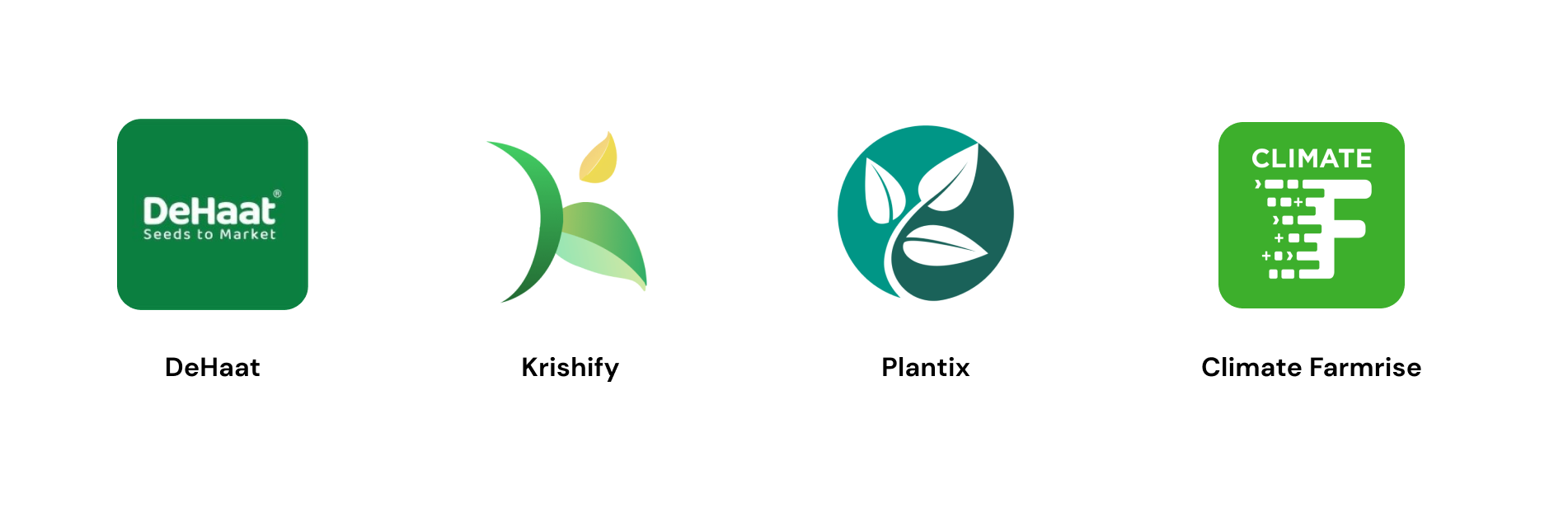
I analyzed the 4 most popular apps surrounding this space and found that these apps don’t let farmers decide what is effective for their farm but promote products that they think will benefit productivity. Almost none of these apps focus on advancing farmers' kowledge about agriculture.
User Research
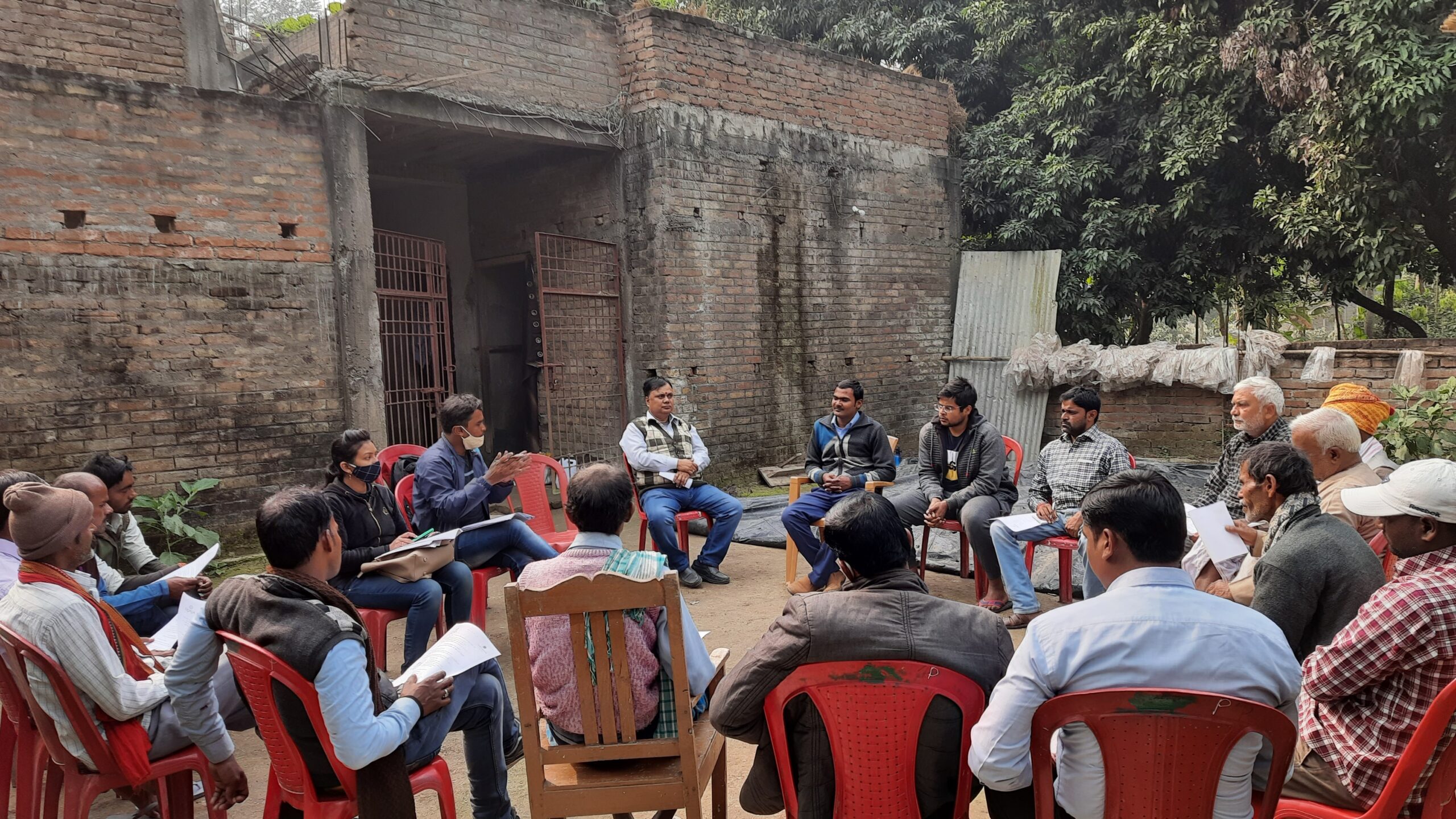
We set up 3 group interviews with each consisting of 8-10 farmers from Eastern- UP and asked them about :
- How do they manage their farms?
- How many people work on their farms?
- What tools or indicators help them calculate their productivity rate?
- If they attend any seminars or workshops related to farming
- Who helps them to select and buy inputs?
- On an average how much do they spend on farming inputs?
Insights
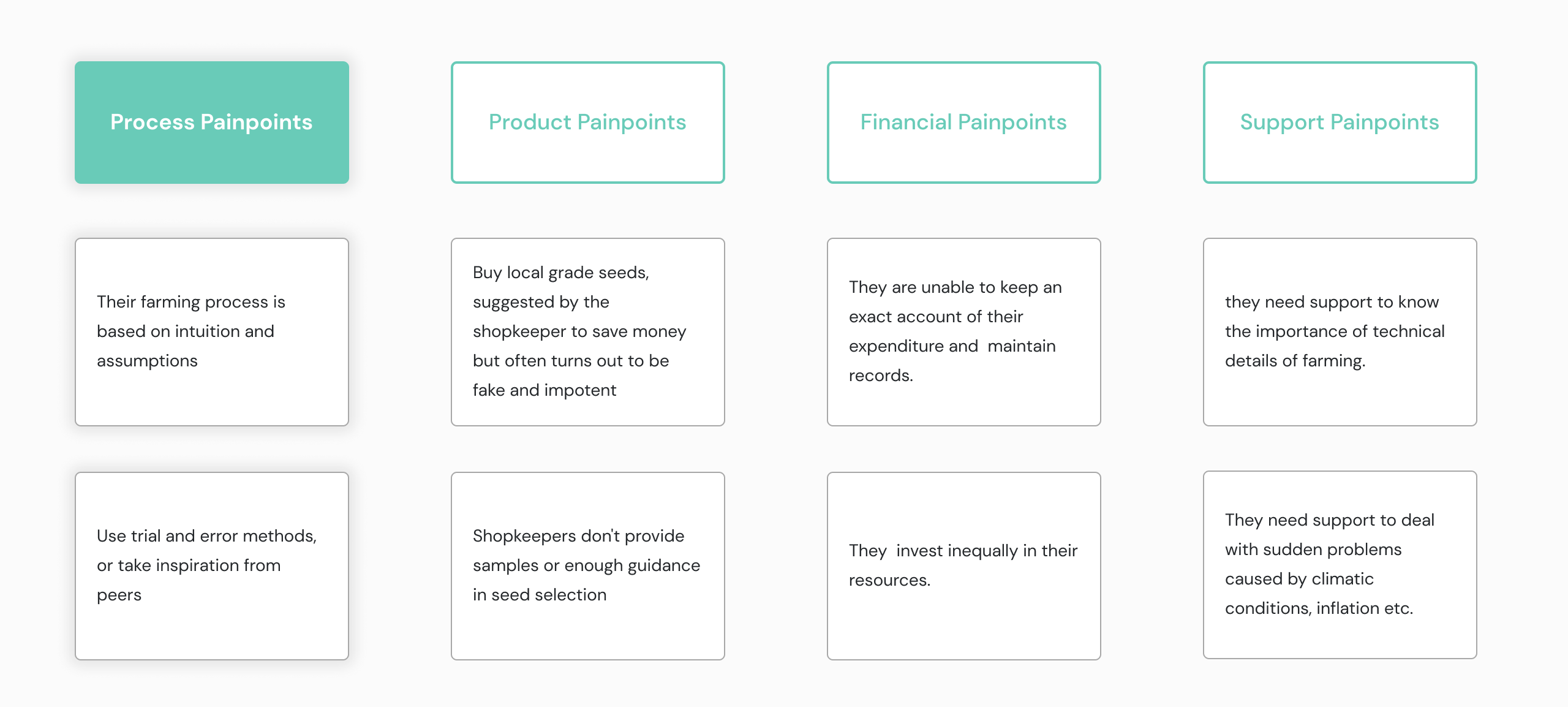
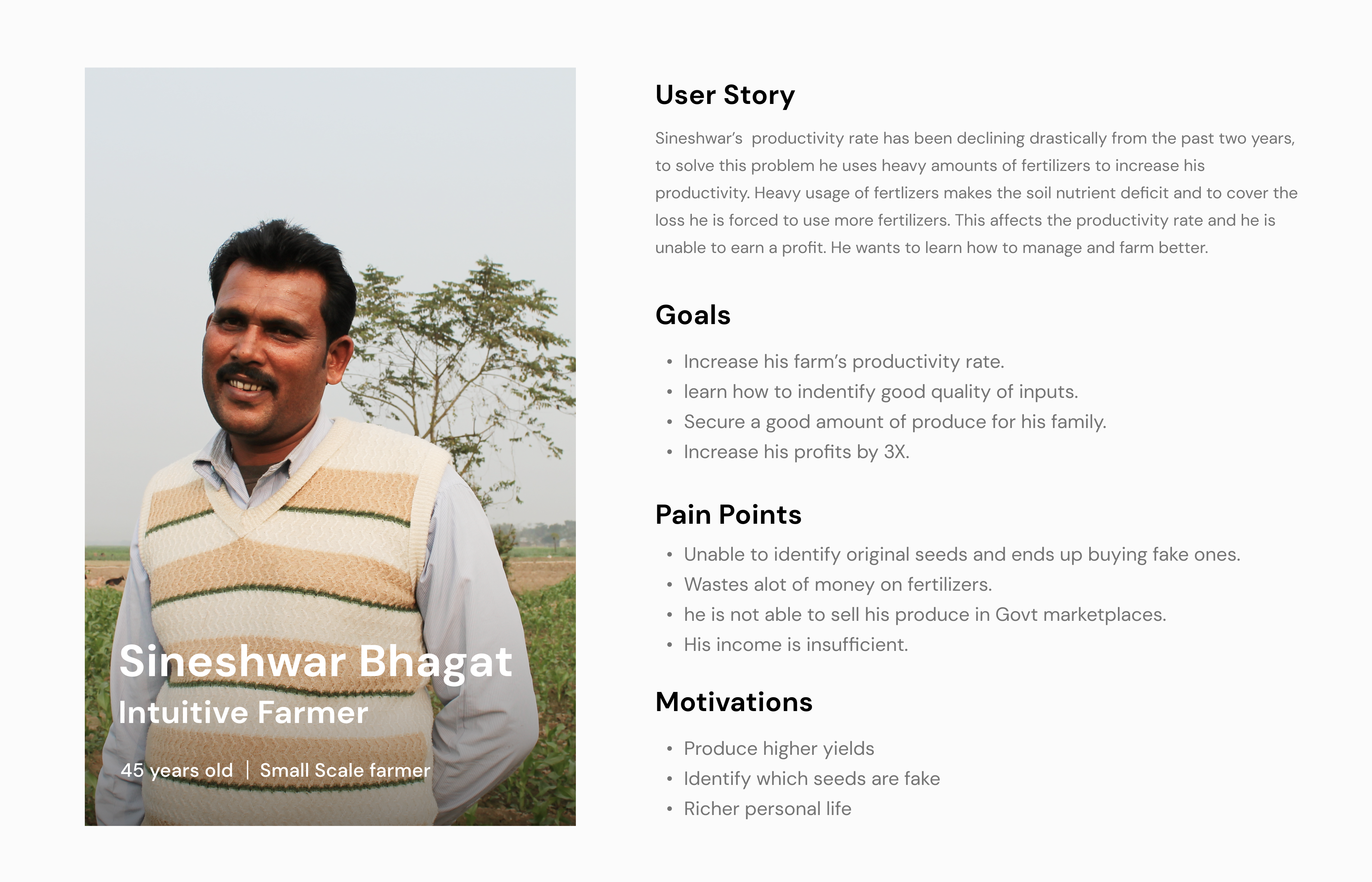
Most of my interviewees didn’t have accurate knowledge about their productivity rate and believed that heavy use of fertilizers gave them a higher yield.
Google's sorting method for pain points helped us notice how process pain points are crucial to farmers’ decision making abilities.
Rice Farmer Persona
The Solution
A Service that provides offline and online courses of agriculture.
Wireframing
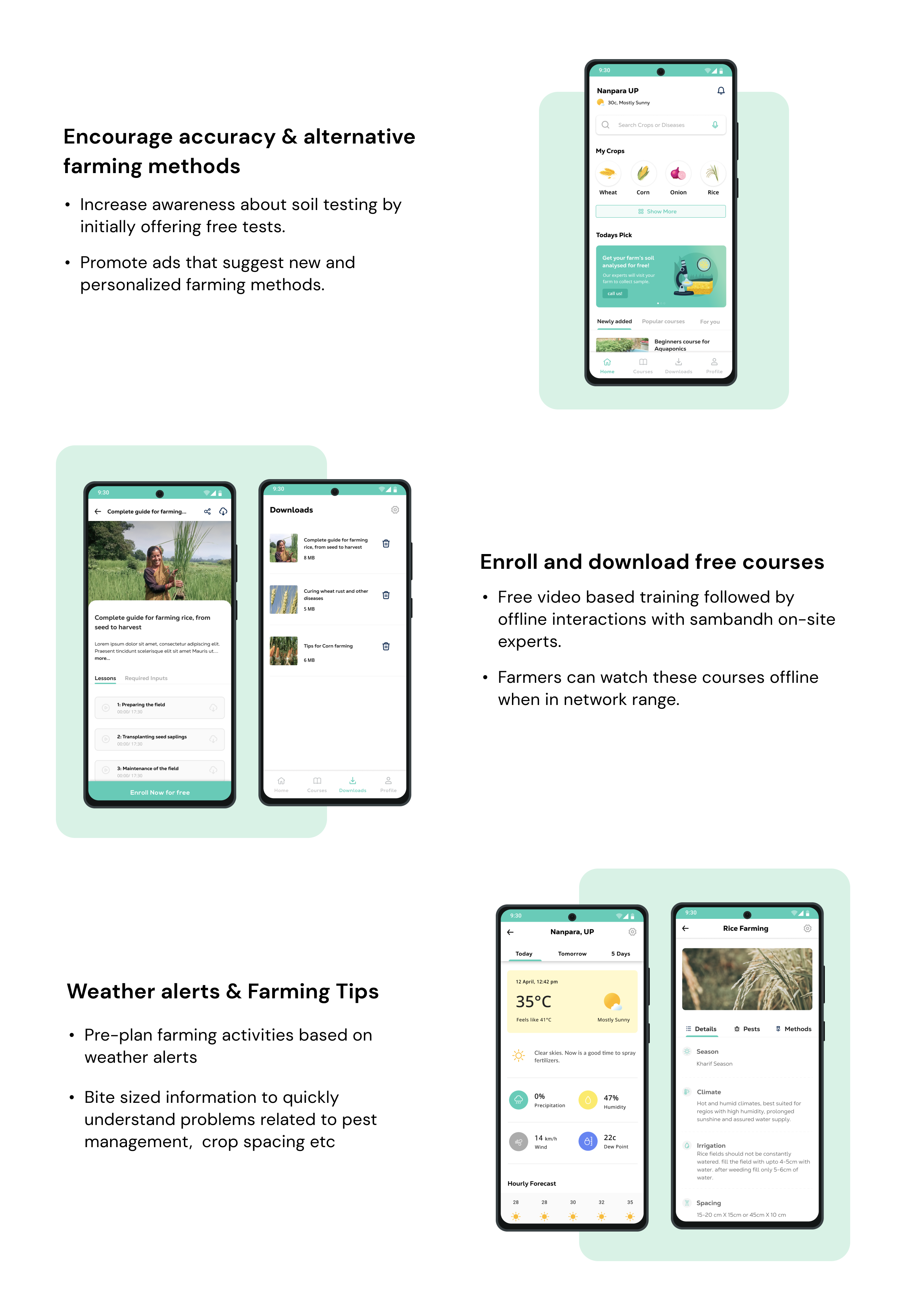
High fidelity wireframes
After several brainstorming sessions we focused on three main flows, selecting a course, enrolling in a course and downloading a course and added additonal features like favorite a courses, climate alerts, and many more. Wireframing was really fun as we could see our ideas unfold in front of us at one place, the whole experience was quite mesmerizing.

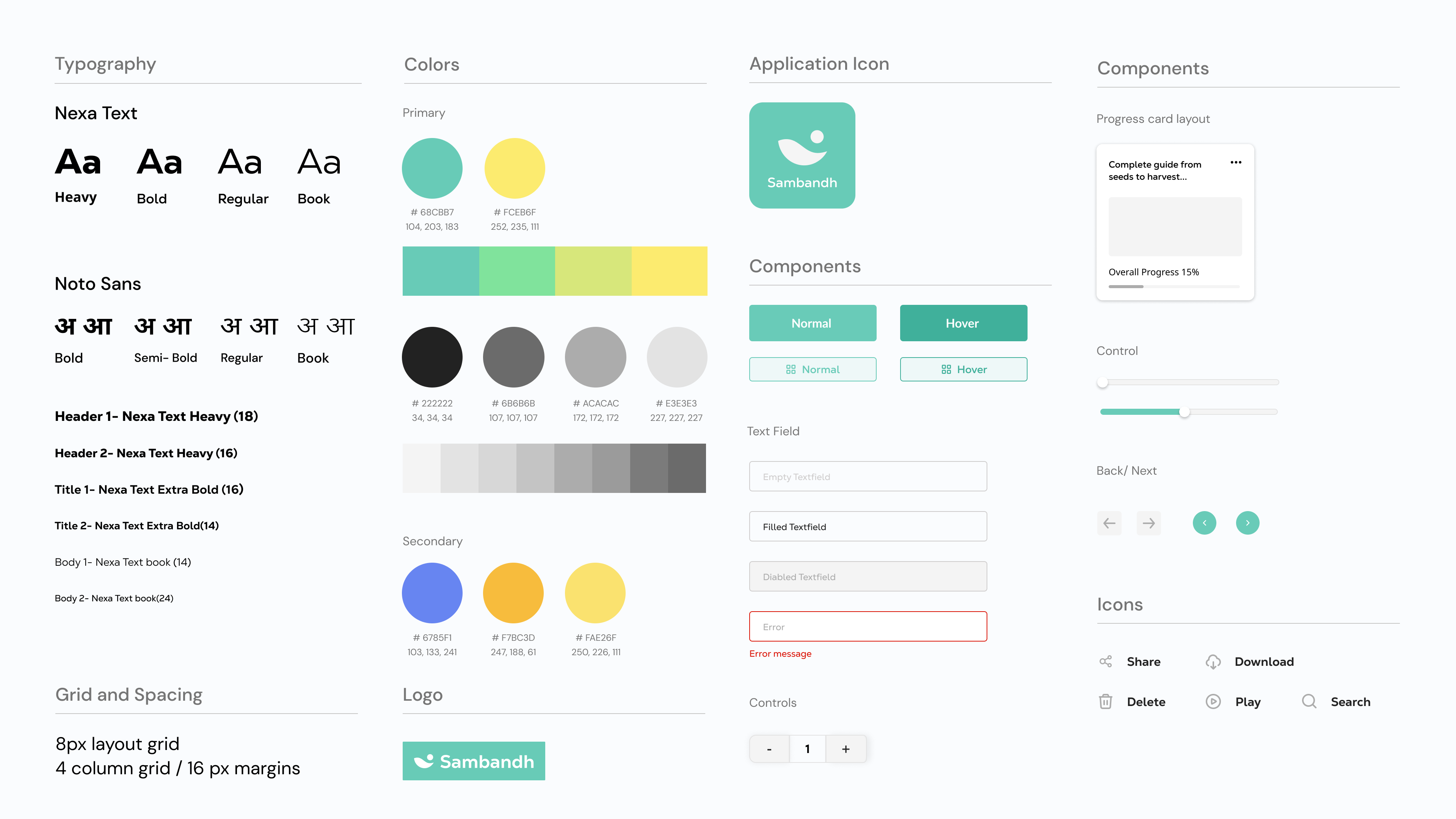
The Style Guide
Final Screens
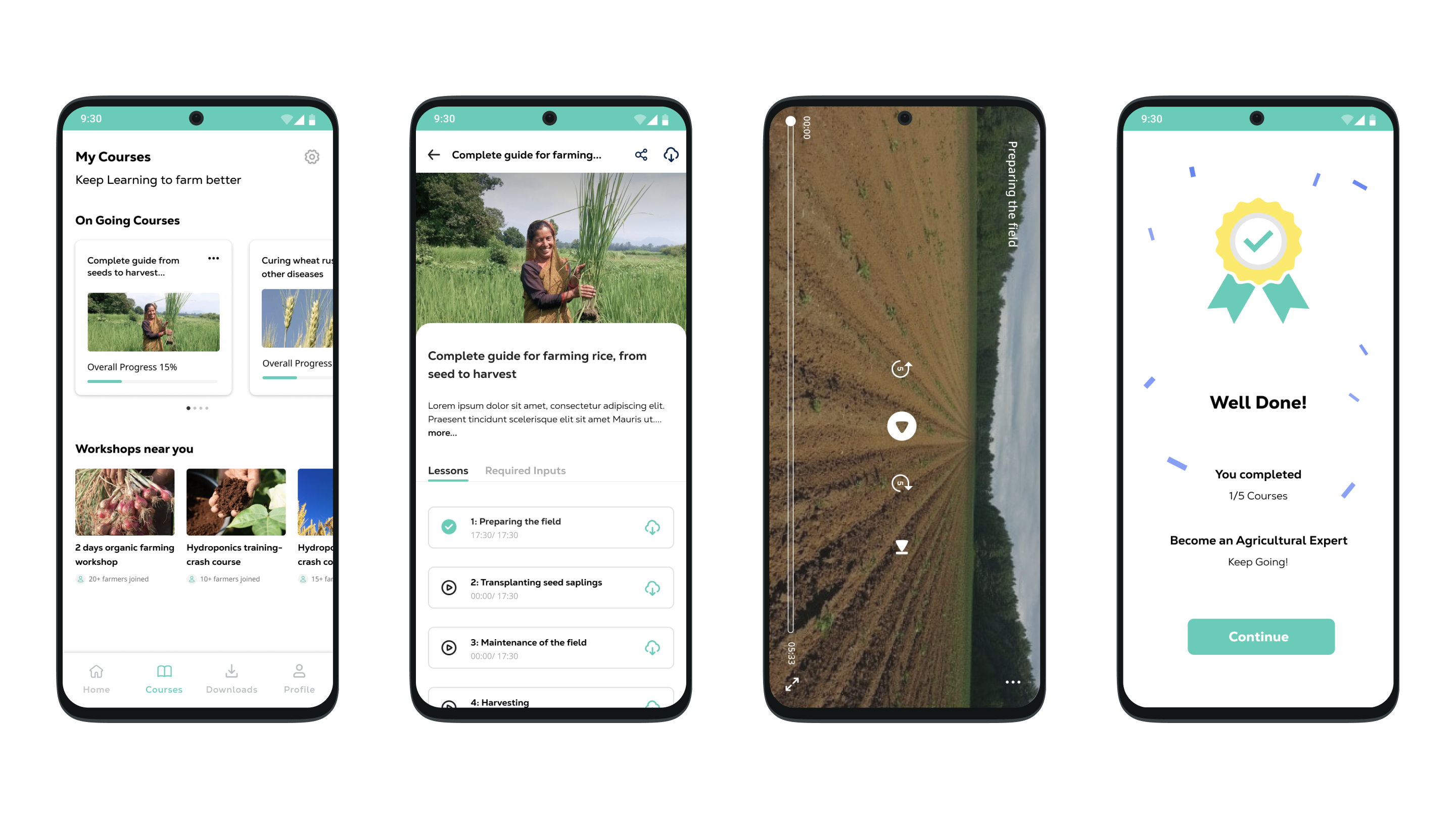
The Final Product
Conclusions & lessons learned
What I'd do differently next time
This was my first-ever solo UX project. Initially my graduation thesis was on an entirely different topic but because of covid I had to change my brief and work around different ways to interview my users. The interviews took place with the help of Oorja’s onsite team, so big kudos to them!  on that note, here’s what I learnt through this project;
1. Speak in your user’s language; Being born and brought up in Mumbai and being fluent in English and Mumbaikar-hindi posed as a challenge because users spoke in bihari and a purer form of hindi. There were instances when I would interview them on call and they would find it difficult to understand what I was asking them. In some cases they were unresponsive. We solved this problem by first curating a set of questions and conducting these interviews with Oorja's onsite team.
2. In your worst situations, something best happens; In the initial phases, I felt completely unmotivated and sad because I couldn’t meet farmers in person. I felt completely stuck and couldn’t find effective methods to engage in one-on-one conversations with them. By taking a step back and assessing the situation practically I learnt that you can form networks of people who are other kinds of stakeholders and gain insights from them. It's ok to ask for help.
3. Prioritise your insights; It's important to understand that you can't fullfill every aspect of the problem area and realising that "which opportunity area would help me solve this problem at least 0.001%?" this thought process and maslow's hierarchy of needs helped me to streamline the insights generated.
Ashlesha Hadkar
Product & UX Designer
ashleshamh@gmail.com →
© Ashlesha Hadkar, 2022